
Time:2026-07-22Reading:829Second
The first step in selecting a probe is to clarifysingle headanddouble-headedThe essential difference.
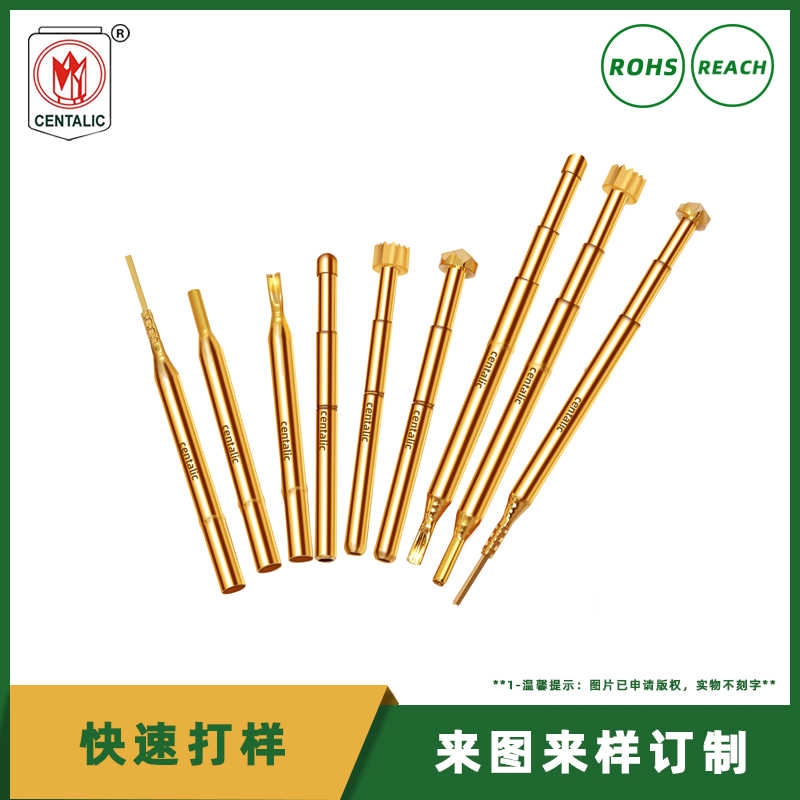
Single head probeIt is a conventional spring needle, with one end in contact with the object to be tested and the other end using a needle sleeve or welding method to extract the signal. It is suitable for testing scenarios with large installation distances and has the advantages of easy maintenance and stable testing results, but its disadvantages are also obvious——Cannot be applied to testing points with smaller spacing. In semiconductor testing, the center to center spacing of the test points is extremely small, and ordinary single head probes cannot be installed at all.
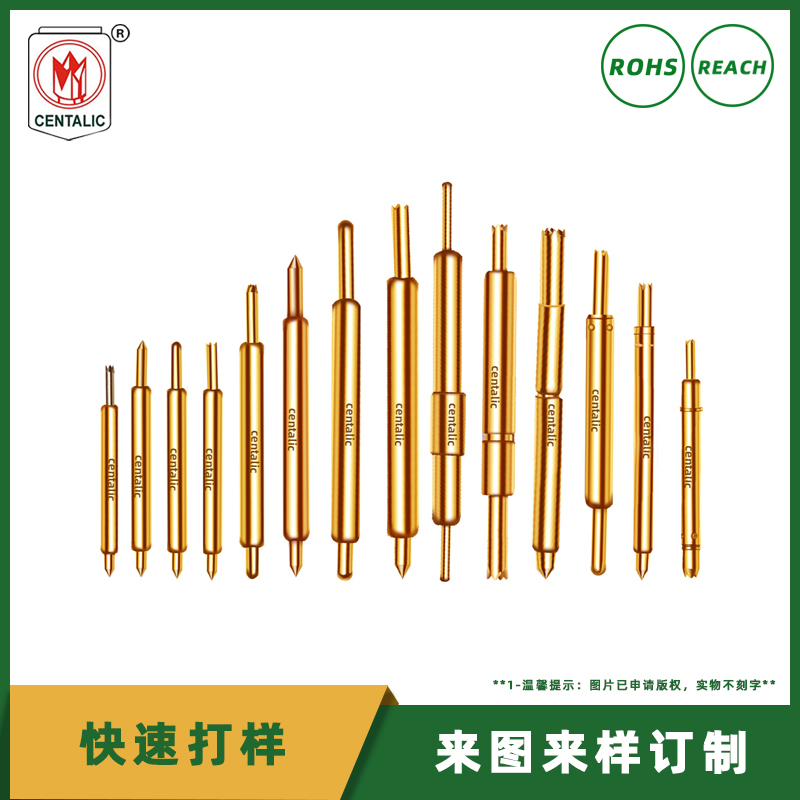
Dual head probeIt was born to solve this difficult problem. Its biggest structural feature is the presence of two needle ends, which allows the probe to be directly fixed in placeIn the guide holes of PCB boards or fixtures, there is no need to rely on needle sleeves.
Double headed probes are not in a single form and can be divided into two types based on structural design:
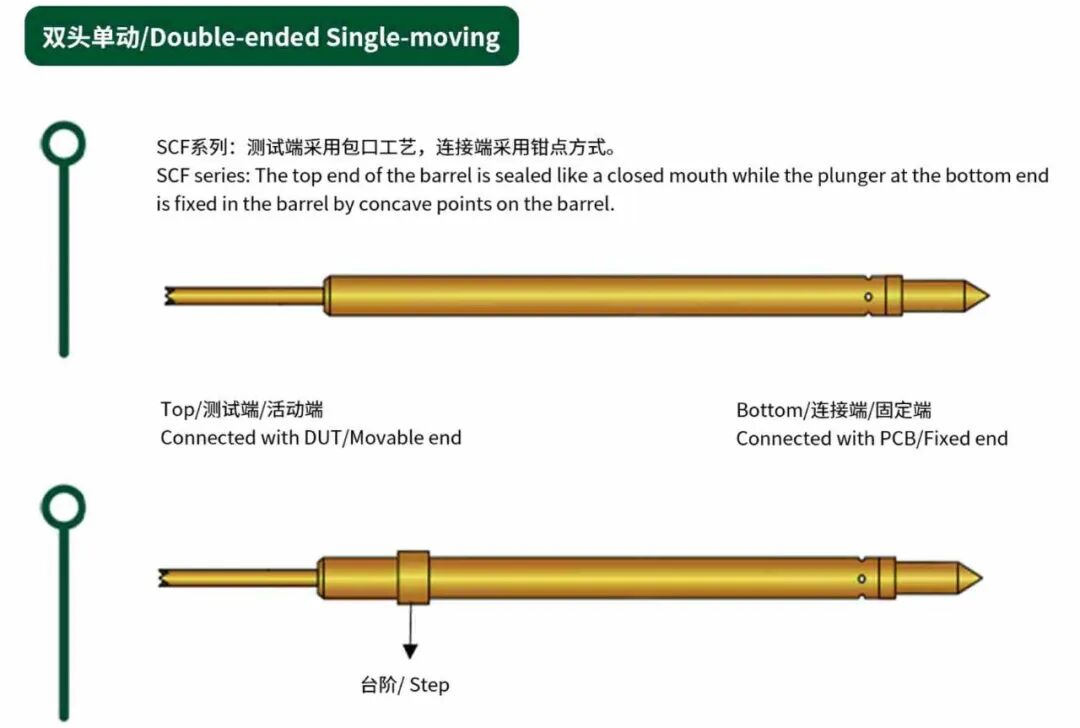
This type of probe has a fixed needle on one end and a movable needle on the other end. During work, only one end can be compressed, while the other end is relatively fixedIt is commonly used in wafer testing scenarios with good consistency in flatness.
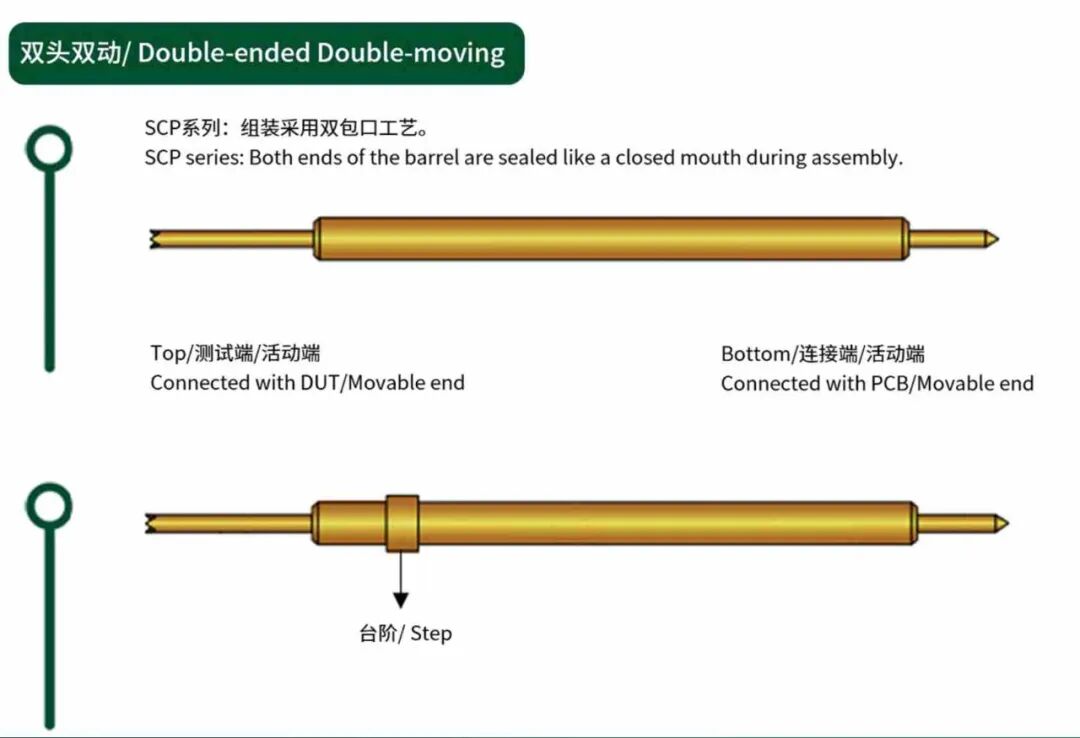
When selecting, attention should be paid to the eight core parameters, each of which directly affects the testing results.
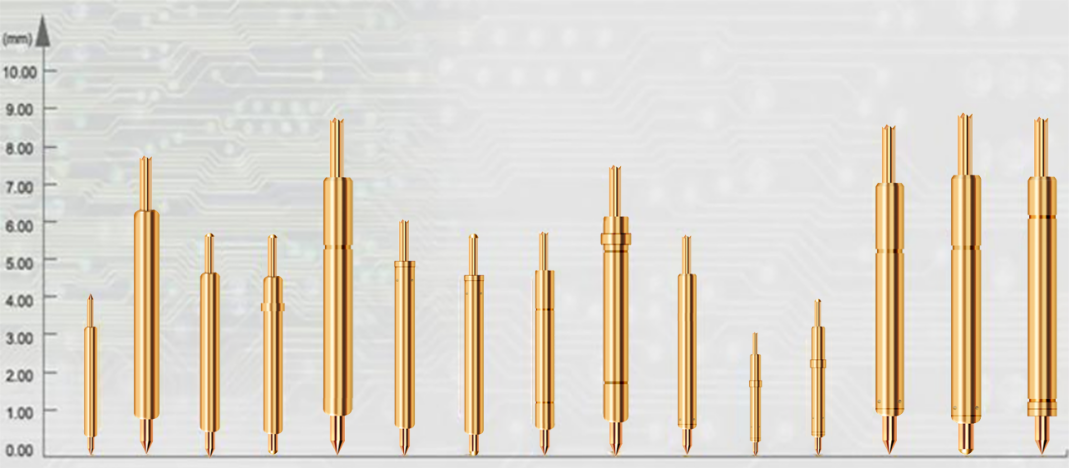
The size of the dual head probe is the primary parameter for selection. The size directly determines the minimum supported installation center distance of the probe.
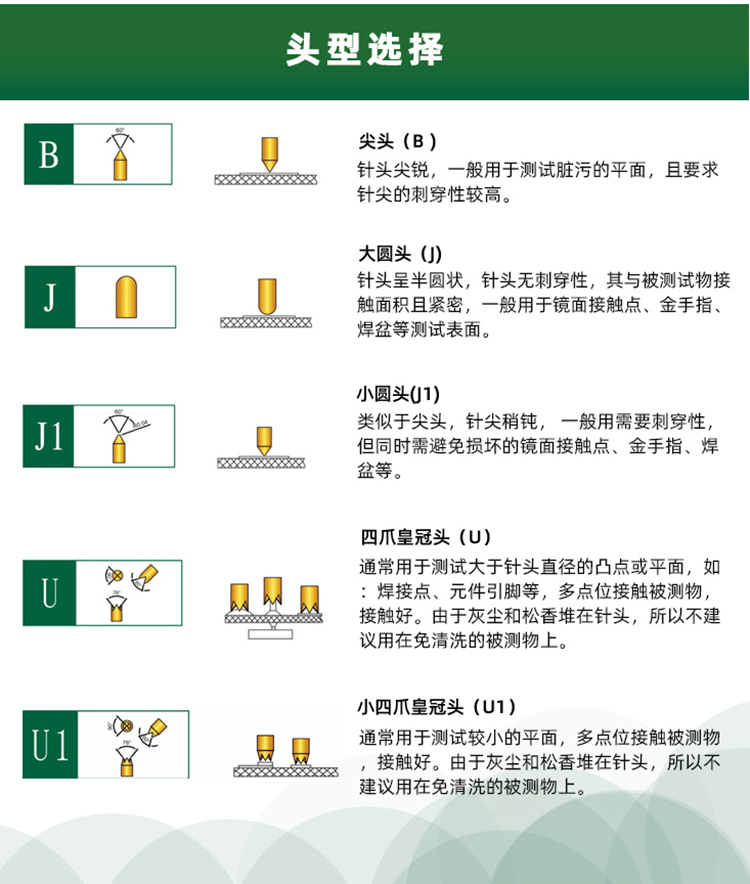
2. Head shape
The shape of the needle is the core factor affecting contact reliability, and when selecting, it is necessary to make a comprehensive judgment based on the material, surface condition, and shape of the test point. The commonly used head types of dual head probes include B, J, J1, U, U1, and other types.
The spring force value determines the pressure applied by the probe to the welding pad, and a force value that is too small can easily lead to poor contact, especially in vibration environments where test results fluctuate; If the force value is too high, it may cause the solder pad to collapse under repeated pressure, and even result in bending deformation of the tested part.
The itinerary cannot be ignored either.SuggestionApply only axial load, not lateral load. InAt 2/3 of the trip, the testing probe shows the best testing effect.
Rated current is a crucial parameter that is easily underestimated in probe selection. If the rated current of the selected probe is lower than the actual operating current, long-term use will inevitably cause needle burning phenomenon. When selecting, it is necessary to ensure that the rated current of the probe is greater than or equal to the test working current.
For high-frequency testing scenarios, bandwidth and contact resistance are the core criteria that cannot be bypassed.
Probes are also consumables, and it is necessary to ensure the reasonable use of the working stroke, exceeding the specified stroke(2/3 of the full stroke) will significantly shorten the lifespan of the probe. Test the pressing speed, if moving at a speed of ≥ 60 times/min, it may shorten the lifespan of the probe.
Mainly used for various communication power electronic components, semiconductor wafer testing, chip packaging testing and other processes, with extremely low contact resistance and ultra-high bandwidth, it can meet the requirements of 5-40G high-frequency signal testing.
At present, Centalic can process the minimum probe diameter: needle diameter: 0.06mm/needle tube diameter: 0.10mm.
Based on the above analysis, the selection process of dual head probes can be summarized into the following six steps:
Fixed structure:Select single or double action structure according to actual needs.
Fixed size:Accurately measure the center distance between the test points to ensure that the selected probe size is appropriate and to avoid interference between adjacent probes.
Head selection type:Match the needle according to the pad material and surface condition.
Fixed elasticity:The principle of balancing reliable contact and device protection isCan penetrate without damaging the solder pad.
Material selection:Select the probe substrate and coating material based on the working conditions.
Test parameters:Pay attention to parameters such as contact resistance, current, bandwidth, and lifespan, and conduct small-scale validation before mass production.
Overall, the selection of dual head probes is a highly challenging task that requires comprehensive abilities. From structural type to dimensional parameters, from needle shape to spring force value, every choice can be the key to the success or failure of the test. Choosing the right probe can not only improve testing efficiency, but also reduce device damage and repair costs——This may be the fundamental reason why "small probes" have become the "invisible leader" of electronic manufacturing quality assurance.