
Time:2026-01-16Reading:1801Second
Test probes play a crucial role in precision electronic measurement, biomedical research, materials science, and other fields. However, how to correctly use test probes to ensure the accuracy and reliability of measurement results is a topic worth exploring in depth. This article will take you to a deeper understanding of the correct opening method for testing probes, making it easy for you to acquire this skill.
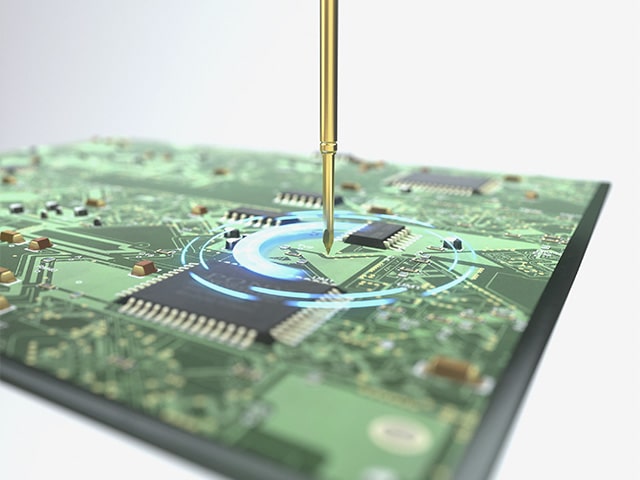
A test probe is a type of electronic component used for testing and measurement, usually formed by three basic components: a needle, a needle tube, and a spring, which are pre pressed and riveted by precision instruments. Plays a role in connecting and conducting signals in electronic testing. One end of the probe contacts the object under test, while the other end is used to conduct signals,implementThe stable transmission of electrical signals provides a foundation for subsequent measurement and analysis.
Test requirements and characteristics of the tested object
Select the appropriate probe type and specifications based on the physical and chemical properties of the tested object, such as hardness, conductivity, size, etc.
Clarify the specific testing requirements, such as measurement accuracy and testing purpose (aging testing/functional testing), to determine the functionality and performance requirements of the probe.
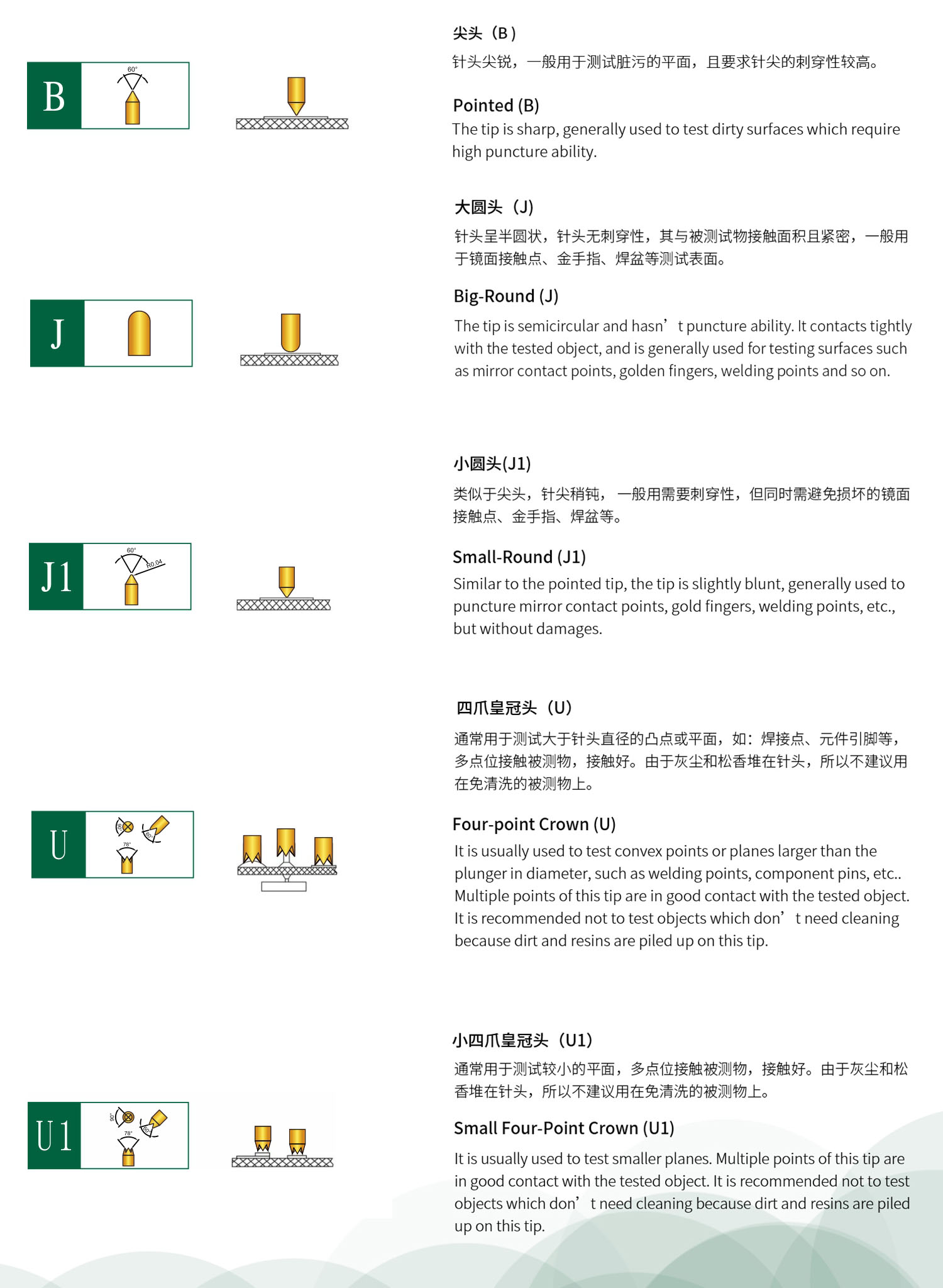
Probe head shape
Select the appropriate probe head type based on the shape, size, and spacing of the measured points. For example, when testing dirty surfaces, it is required that the needle tip has high penetrability, and a pointed probe can be chosen; For testing smaller planes, it is necessary to have multiple points of contact with the object being tested. If the contact is good, a small four claw head can be selected.
Probe elasticity
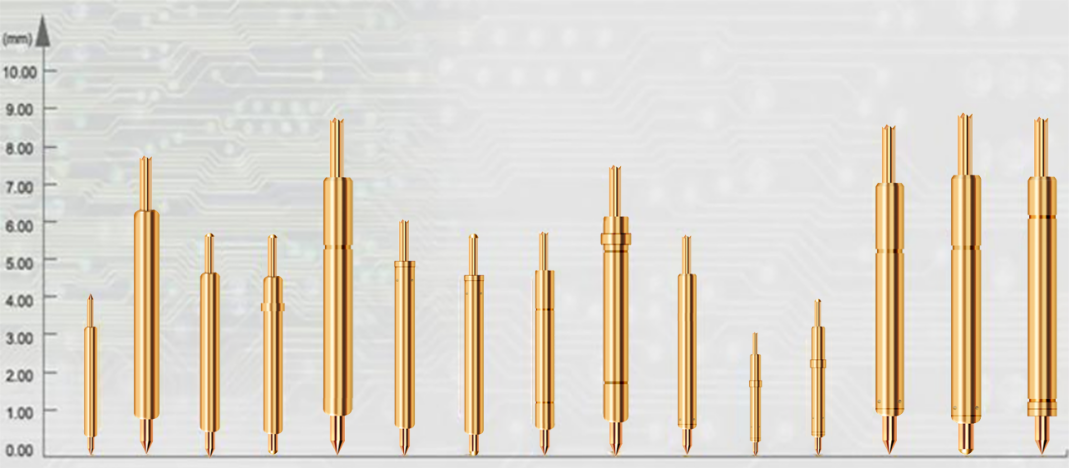
Choose the appropriate elasticity based on the required probe elasticity. In the Centalic product catalog, there are detailed instructions on the size, head shape, electrical parameters, etc. of conventional probes.
Create a good testing environment

Using high-quality fixture boards
Based on years of testing experience at Suntory, a large number of probes are used on fixtures for rapid testing of circuit boards on automated production lines. Generally speaking, fixture boards made of excellent fixture materials can be very helpful for probes. Firstly, they can reduce the presence of glass fibers. If small powder particles enter the inner wall of the probe, it will cause the reverse effect of the blocking spring; Secondly, precise drilling can greatly help test the verticality of the probe, thereby reducing the risk of unilateral pressure during the testing process and extending the service life of the probe, especially the concentric drilling process is very important.

The appropriate needle model is also crucial for later probe maintenance. We often find that some probe needles perform poorly at this testing station, resulting in a large number of false detections during testing, and even requiring probe replacement after thousands of times. Therefore, it is necessary to carefully consider whether the selection of probe needles is correct. We need to use the most suitable needle to test the corresponding object being tested.
Select probe recommended itinerary
Most customers may not consider the option of using good solder paste, but high-quality solder paste can greatly help with the effectiveness of probe testing. Poor quality solder paste sometimes contains a variety of impurities inside, which may exceed the hardness of the probe tip, causing harm to the probe tip. Both high-quality solder paste and flux can have an impact on the testing environment of probes, and relatively speaking, high-quality solder paste can help extend the lifespan of probes.
Regular cleaning of probes
Regularly use appropriate cleaning agents and tools to clean the probe, keeping its surface clean and smooth.
Centalic recommends customers to develop their own probe replacement schedule, using the recommended lifespan of the probes. If any abnormal phenomena occur, it is necessary to replace the probes reasonably.
As an important tool in the field of measurement, the correct use of test probes is crucial to ensure the accuracy and reliability of measurement results.