
Time:2026-06-22Reading:2223Second
When it comes to mobile phone chips, the first word that comes to most people's minds is probably "processor" - names such as Kirin, Snapdragon, Dimensity, Apple A-series, etc. These names have almost become synonymous with mobile phone performance. But if you take apart a mobile phone, you will find that there is not just one SoC chip in the phone, and the other chips that work silently are also indispensable.
First, let's talk about the processor that everyone is most familiar with. Strictly speaking, the processor in today's mobile phones is no longer just a simple CPU, but a highly integrated system on chip (SoC).
Taking the fifth generation Snapdragon 8 Ultimate Edition as an example, a SoC integrates multiple modules such as CPU, GPU, NPU (Neural Network Processing Unit), ISP (Image Signal Processor), DSP (Digital Signal Processor), and baseband chip. From a functional perspective, it can hold up to several; Physically speaking, it is indeed just a chip. But it is precisely because of this high level of integration that people mistakenly believe that this important chip is the only one in mobile phones.
In fact, no matter how powerful the SoC is, it cannot cover all the functions of the phone. Without the cooperation of other chips, the phone cannot even turn on.
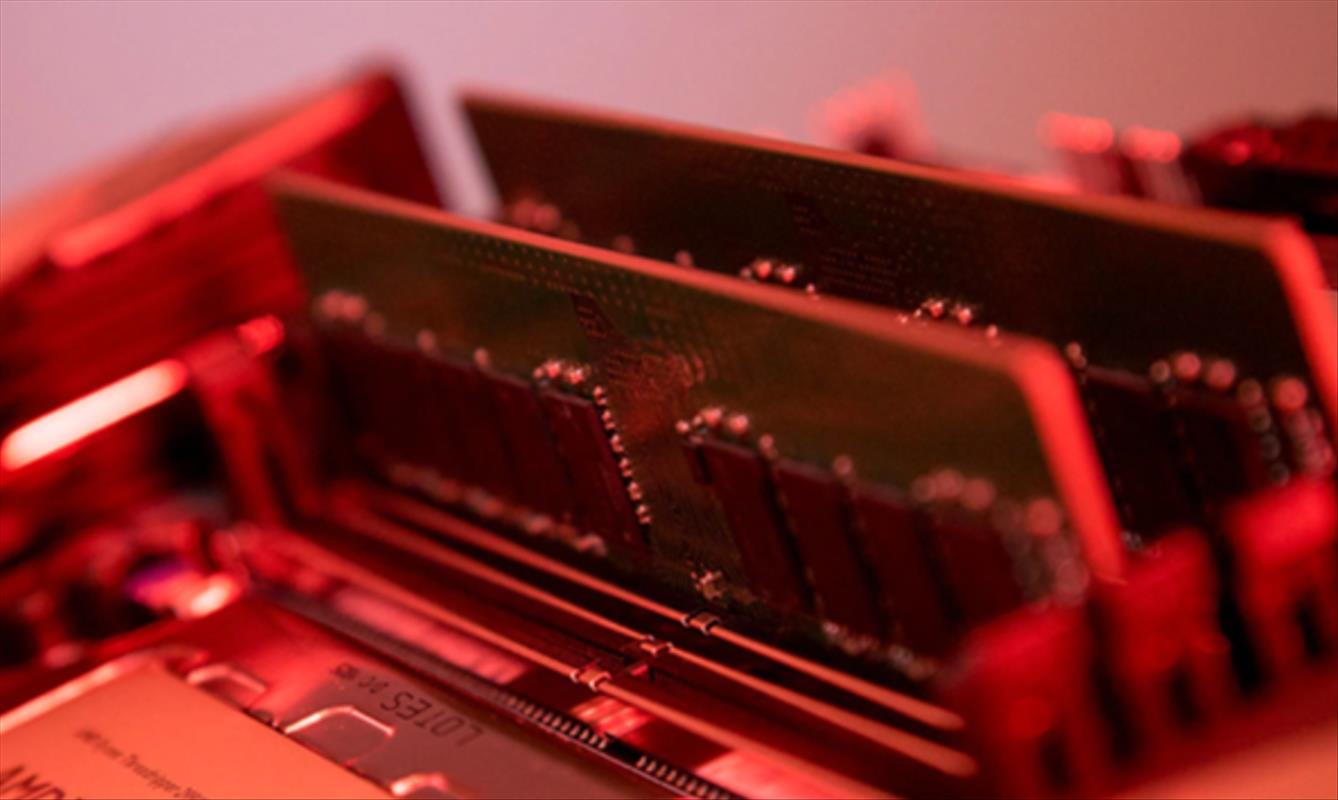
Taking storage chips as an example, there are at least two storage chips in mobile phones: one is the RAM, which is responsible for temporarily storing running data; The other is flash memory (UFS or NAND Flash), responsible for long-term storage of photos, applications, and system files.
The performance of these two chips directly affects the smoothness and read-write speed of the phone. Flagship phones commonly use LPDDR5X memory and UFS 4.0 flash memory, each of which is an independent chip packaged on the motherboard.
There is a type of chip in mobile phones that, although inconspicuous, is crucial, and that is the power management chip (PMIC). Its responsibility is to convert the voltage output by the battery into the precise voltage required by each module, ensuring that components such as the CPU, screen, and camera receive stable and appropriate power supply.
A PMIC often integrates multiple DC-DC converters and LDO regulators internally, managing over a dozen power supply channels. In addition, fast charging protocol chips, battery protection chips, charging ICs, etc. also play their respective roles, jointly guarding the power system of mobile phones. There are several chips related to power supply alone.
The reason why mobile phones are called mobile phones is that their communication ability is fundamental. In addition to the main baseband chip integrated inside the SoC, mobile phones also require a large number of RF devices such as RF front-end chips (RFFE), power amplifiers (PA), filters, antenna switches, etc.
Mobile phones that support 5G have a particularly large number of RF front-end chips, requiring different filters and amplifiers for different frequency bands. A full band 5G phone may have up to a dozen or even more RF related chips.
Wi-Fi、 Bluetooth, NFC, GPS and other functions also require their own chips or modules. Although some are integrated into SoCs, external RF chips and antenna matching circuits are still required.
Mobile phones can perceive their surroundings through various sensor chips. Accelerators and gyroscopes are usually packaged as a six axis IMU, in addition to barometers, geomagnetic sensors, ambient light sensors, proximity sensors, ToF sensors, etc. These MEMS (Micro Electro Mechanical Systems) chips are each small but have different functions.
In addition to lenses and photosensitive components (CMOS image sensors), the camera module also includes a focus driver chip, a voice coil motor driver for OIS optical image stabilization and autofocus, and a laser focusing module. If a mobile phone has three to four cameras, each module has its own sensor and driver chip, and the number naturally increases exponentially.
The screen driver chip (DDIC) is responsible for converting image data into pixel signals on the screen. OLED screens also require touch ICs, screen fingerprint sensor chips (optical or ultrasonic), etc. Folding screen phones also require additional hinge angle sensors and related control chips.
In addition to the above categories, there are also many small chips in mobile phones that are easily overlooked: audio codec chips, vibration motor driver chips, infrared remote control emission chips, eSIM chips, security chips (used for payment and key storage), etc., each of which works silently in its own position.