
Time:2026-07-27Reading:788Second
The China Charging Alliance has released data on the operation of charging and swapping infrastructure in June, and the total number of public charging guns in China has officially crossed the 5 million mark, taking the scale of the charging supporting network to a new level.
As of the end of June, the total number of charging guns in China was 23.057 million, a year-on-year increase of 43.2%. Among them, there are 5.009 million public charging guns available for external use, a year-on-year increase of 22.3%.
The total power of all public piles has reached 247 million kilowatts, with an average single gun power of 49.35 kilowatts, and the proportion of fast charging equipment continues to increase.
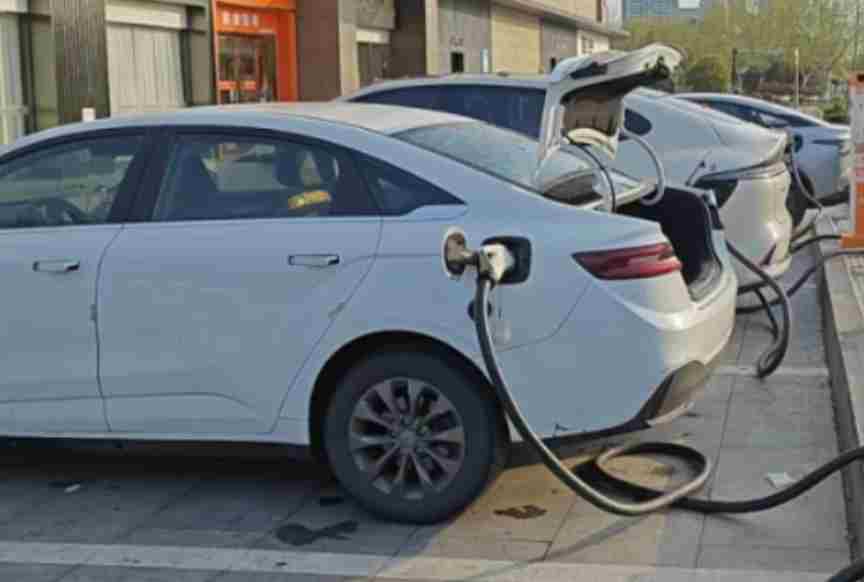
The number of private charging guns installed in their own parking spaces has reached 18.048 million, with a growth rate far exceeding that of public charging stations, a year-on-year increase of 50.4%. The reported installed electricity capacity of private charging facilities has reached 155 million kilowatts.
The regional distribution gap is very obvious. In ten provinces including Guangdong, Zhejiang, Jiangsu, Shandong, and Shanghai, the total number of public charging stations accounts for more than 60% of the country's total.
The daily charging electricity consumption is also concentrated in these economically developed areas with a large number of new energy vehicles. The main sources of daily charging are household passenger cars and buses, while the proportion of electricity consumption for logistics, rental and other operating vehicles is relatively low.
In June, the total electricity consumption of the national charging and swapping industry was 14.8 billion kilowatt hours, a year-on-year increase of 57.1%, indicating that the daily charging demand of car owners continues to rise.
In the first half of the year, 2.965 million new charging piles were added, a slight decrease compared to the same period last year. Among them, 292000 public piles were added, and 2.673 million private piles were added.
In the first half of the year, 5.09 million new energy vehicles were sold in China, with a ratio of 1 to 1.7 new pile up vehicles. The speed of supporting construction can just keep up with the growth of new vehicles.
It is evident that the industry's development strategy has changed. In the past, people flocked to invest in public stations, but now more car owners are directly installing private charging stations at home to reduce the pressure of charging outside.
More public charging stations are being deployed in highways, commercial districts, and rural areas to meet the travel needs of car owners without fixed parking spaces. A public-private charging system has been formed, covering various charging scenarios such as daily commuting and long-distance travel.